
How to Stop Wasting Money on Citation Services That Do Not Work
How to Stop Wasting Money on Citation Services That Do Not Work
If you are still buying packages of 200 “high-authority” citations for $50, you aren’t just behind the times – you are actively throwing your marketing budget into a digital black hole. As a Local SEO Consultant and Google Business Profile Product Expert, I see the same story every week: a business owner or agency lead comes to me frustrated because they’ve “done everything right,” yet their rankings are as stagnant as a pond in August. They’ve built the links, they’ve submitted the NAP (Name, Address, Phone) details to every obscure directory from here to Timbuktu, and yet, they can’t rank google business profile assets in the top three spots.
The reality of 2026 is harsh: the “Citation Spam Trap” is real, and it’s swallowing the budgets of those who refuse to evolve. Traditional, high-volume citation building is a relic of 2015. Today, google business profile seo requires a surgical approach, not a sledgehammer. In this deep dive, I’m going to explain why your current citation strategy is likely failing and how to pivot to tactics that actually move the needle on Google Maps.
The Death of the “Volume” Myth: Why 300 Citations Won’t Save You
For years, the standard operating procedure for local SEO was simple: more is better. If 50 citations were good, 300 must be better. This logic was fueled by cheap labor and automated submission tools that promised to put your business on every corner of the internet. But as Chris Lever SEO has noted in recent research, Google has become incredibly sophisticated at identifying and ignoring what we now call the “Citation Spam Trap.”
The problem isn’t just that these directories are low quality; it’s that they are functionally invisible. My internal data shows that up to 70% of citations built by low-cost, high-volume providers never actually reach Google’s index. If a search engine doesn’t index a page, that page does not exist for SEO purposes. You are paying for a link on a site that Google has already decided is thin content or duplicate garbage. These “zombie citations” provide zero authority and zero relevance.
In 2026, Google’s algorithms are designed to filter out noise. When a service blasts your details across 300 directories that all look identical and have no traffic, Google views it as a manipulation attempt or, at best, irrelevant clutter. The “volume” myth is dead because Google’s priority has shifted from “Who is mentioned the most?” to “Who is mentioned in places that actually matter?” Indexing is the only metric that counts. If you can’t find your citation by searching for its specific URL or a unique string of text on it, you’ve wasted your money.
The 2026 Local Ranking Factors: Where the Needle Actually Moves
If citations aren’t the primary driver anymore, what is? Research from industry leaders like BizIQ and Local Falcon points to a significant shift in local seo ranking factors. We are moving away from static signals (like NAP consistency) and toward behavioral and engagement signals. This is where modern google business profile optimization happens.
A landmark Uberall study confirmed what many of us in the trenches already knew: visibility and conversion are now tied directly to profile engagement. Google wants to see that users are interacting with your profile. Are they clicking “Call”? Are they requesting directions? Are they spending time looking at your photos or reading your Q&A section? These signals are far more powerful than a link on a “Top 10 Plumbers in [City]” directory that no human has visited since 2019.
Furthermore, proximity remains a dominant factor, but it is increasingly influenced by “relevance density.” This is why you might see a business with fewer reviews outranking a giant. If you’ve ever wondered Why Your Competitor Ranks Higher on Maps with Fewer Reviews, the answer usually lies in their engagement-to-proximity ratio and their localized content strategy, not their citation count.
In 2026, the ranking hierarchy looks like this:
- Primary: Google Business Profile completeness and engagement signals.
- Secondary: Review velocity, sentiment, and keywords in reviews.
- Tertiary: High-quality, indexed, niche-relevant citations.
- Ignored: Low-quality, unindexed directory blasts.
How to Spot a “Waste of Money” Citation Service
Before you sign another contract for citation building services, you need to put the provider through a rigorous vetting process. Most cheap services are simply “NAP blasters.” They use software to fill out forms on hundreds of sites, many of which are owned by the same network of low-quality directories. Here are the red flags of a service that will waste your money:
- The “Hundreds” Promise: If they promise 200+ citations for a flat fee under $100, they are using automation on dead sites.
- No Indexing Report: If their final report only shows a list of URLs but doesn’t prove those URLs are indexed in Google, the report is worthless.
- Instant Delivery: Real, high-quality citation building involves manual outreach and verification. If the work is “done” in 48 hours, it’s automated spam.
- Lack of Niche Focus: If they don’t ask about your specific industry or local neighborhood, they are just using a generic list.
Instead of paying someone to build 200 dead links, you are much better off using a google business profile audit tool to identify the gaps in your existing presence. A targeted audit will show you where your NAP is actually inconsistent on *important* sites, rather than just adding more noise to the system. Spend your time fixing the 10 citations that matter rather than building 100 that don’t.
The “Quality” Blueprint: Citations That Actually Work
Does this mean citations are dead? Absolutely not. It means the *strategy* has changed. A modern, effective local citations seo strategy focuses on three specific pillars: Data Aggregators, Niche Relevance, and Hyperlocal Relevance.
1. The Major Data Aggregators
Instead of manual submissions to 500 small sites, focus on the big four: Data Axle, Neustar Localeze, Foursquare, and GPS aggregators. These are the “fountains” of data that Google and other search engines actually trust. If your data is correct here, it will naturally trickle down to the smaller, legitimate sites over time.
2. Niche Relevance
Google values relevance above all else. If you are a lawyer, a citation on Avvo or FindLaw is worth more than 50 general directory links. If you are a contractor, Houzz and HomeAdvisor (despite their flaws) carry significant weight. These sites have their own traffic and authority, which transfers “trust” to your GBP. This is a core component of how to rank google business profile listings in competitive markets.
3. Hyperlocal Relevance
This is the most overlooked area of local SEO. A link from your local Chamber of Commerce, a neighborhood blog, or a local charity you sponsor is a powerful signal to Google that you are physically and socially present in that specific geographic area. These are hard to get, which is exactly why they are so valuable. If your rank is stuck, you might need to look at 3 Fixes for the 2026 Local Filter When GMB Rank Is Stuck, which often involves strengthening these hyperlocal signals.
Beyond Citations: Automating Your Google Business Profile SEO
The goal of local SEO in 2026 isn’t just to “be listed”; it’s to dominate the map grid. This requires moving beyond manual spreadsheets and into the world of sophisticated local seo tools. You need to know exactly how you rank at a granular level – literally block by block.
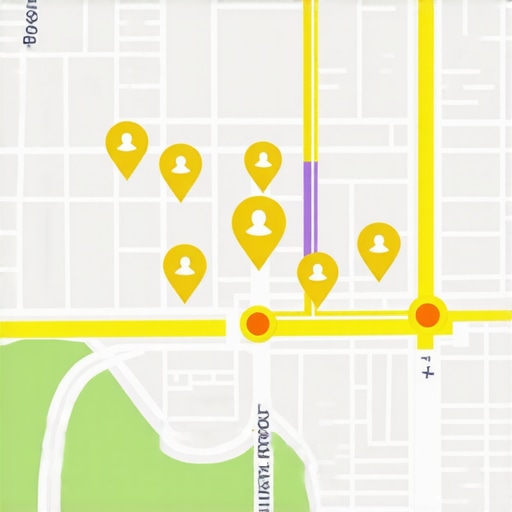
Many business owners look at a single ranking report and think they are doing well, only to realize they only rank in the building where their office is located. This is known as the “Map Grid Trap.” To avoid this, you should be using professional GBP ranking tools that provide a visual heat map of your visibility. This allows you to see exactly where your “authority” drops off so you can target your local content and ad spend accordingly.
However, be careful with the data you receive. Some software can be misleading. I always recommend reading up on The Map Grid Trap: Why Your Ranking Software Lies About Real Calls to ensure you are measuring ROI, not just vanity metrics. Furthermore, technical errors can often mimic ranking drops. You should know How to Spot a Grid Sync Error Before it Tanks Your 3-Pack Rank, as these technical glitches in the Google ecosystem can make it look like your SEO is failing when it’s actually a data synchronization issue.
To truly scale, you need local seo ranking tools that monitor these changes in real-time. Automation should be used for monitoring and reporting, while your “work” should remain manual and high-quality. Don’t automate the building of your reputation; automate the tracking of it.
Conclusion: Shifting Your Budget to High-ROI Activities
The era of buying citations by the pound is over. If you want to rank higher on google maps and generate actual google maps lead generation, you must stop chasing volume and start chasing value. Google’s 2026 algorithms are designed to reward businesses that provide a great user experience and have a legitimate, verified presence in their community.
Stop burning your budget on citation building services that deliver unindexed links on ghost-town directories. Instead, invest that money into a high-quality gmb ranking service, professional-grade local seo software, and a citation cleanup service that actually fixes your data on the sites that matter. Focus on engagement, niche authority, and hyperlocal relevance. That is how you win the 3-pack in 2026.
If you’re ready to stop guessing and start growing, it’s time to audit your current strategy. Use a local seo software suite to see where you actually stand, and stop paying for the digital equivalent of magic beans.