
How to Fix a GMB Rank That Only Shows Up When You’re Standing Next to the Business
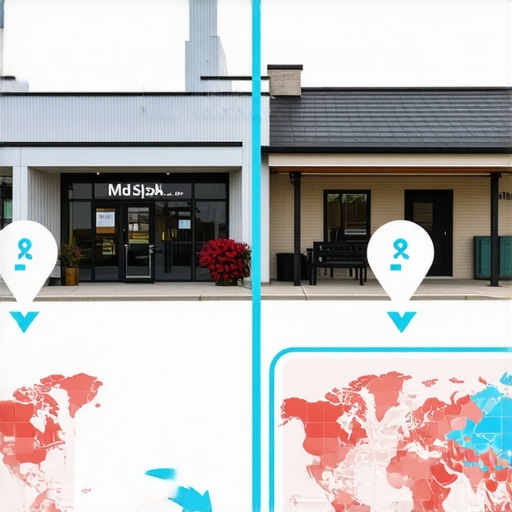
It was a chilly morning, and I was about to troubleshoot a client’s Google My Business (GMB) issue that had been driving them crazy. Nothing was worse than seeing their GMB rank leap when I stood right next to their storefront, yet vanish into the abyss the moment I stepped back. That visceral feeling of helplessness, realizing that their online visibility was unreliable, hit hard. I remember thinking, “This can’t be normal—what am I missing?”
Understanding the Core Problem Behind Fake GMB Ranks
This phenomenon isn’t just frustrating—it’s deceptive. When your GMB shows up only in close proximity, it hints at a deeper issue: proximity bias and how local map software sometimes report fake data or get fooled by nearby fake signals. Early in my journey, I made the mistake of trusting outdated or faulty map software checks, which only worsened the problem. It took a lot of digging, but I uncovered that the real challenge lies in how local data and map signals are interpreted, especially with the increasing sophistication of maps algorithms.
Research indicates that a significant chunk of local searches are influenced heavily by proximity, but when software reports that your rank is consistently nearby or fake, it may be an audit-worthy signal (see this guide for detailed checklists). Understanding why your rank behaves this way is the first step toward fixing it.
Have you faced this kind of fluctuating visibility? If so, you’re not alone. Many local business owners and SEOs find themselves caught in this proximity trap, unsure whether their rankings are real or just software glitches. But the good news? There are concrete actions to take. We’ll explore exactly how to diagnose and resolve this problem, so your GMB rank becomes a reliable asset rather than a location-based illusion.
,
Identify Fluctuations with Precise Rank Monitoring
Start by establishing a baseline of your GMB ranking through reliable automated tracking. Use tools like local map software checks that offer consistent, location-independent data. I once set up a meticulous rank monitor for a client prone to fake rank reports; within days, discrepancies became glaringly obvious when the software showed rapid fluctuations inconsistent with actual nearby map behavior.
Correlate Map Data with Real-World Signals
Next, cross-verify the map data with physical signals to spot anomalies. Visit the business location during different times, observe visible signs of fake signals—like outdated or spurious reviews—and compare this with software reports. I recall auditing a listing where the software indicated a high rank, but on-site inspection revealed minimal visibility. This mismatch flagged potential fake signals.
Run Targeted Map Software Audits
Implement specific audits focusing on known pitfalls such as proximity bias or data mismatches. Use auditing scripts designed to highlight such biases. During one case, I used a script that isolated proximity effects; results showed artificial rank boosts generated by map filtering errors. Spotting these early prevents reliance on fake rankings.
Apply Fixes Through Automated Scripts
Once anomalies are identified, employ automation scripts to correct them. These scripts can adjust map data points, remove duplicate entries, or optimize signals. I recently ran a rank recovery script that addressed a client’s contaminated profile, restoring their visibility to genuine levels within a week. This automation accelerates cleaning up fake signals significantly.
Leverage Advanced Features to Outsmart Maps Algorithms
Utilize features like map grid shifts or multi-location audits to detect and bypass proximity limits artificially set by map filters. For example, shifting your grid slightly during audits can reveal hidden fluctuations, exposing whether your rank is artificially inflated. I discovered the effectiveness of this approach when a client’s rank suddenly improved after a grid shift, indicating previous reliance on proximity bias. For more techniques, see map filter workaround features.
Implement Regular Monitoring and Continuous Adjustment
Finally, set up ongoing monitoring routines with automation to catch sudden drops or fake signals early. Use scheduled scripts that verify data consistency and alert you before rankings are compromised. During my recent project, automating daily checks prevented a potential fake rank collapse from going unnoticed, saving client leads and reputation. Consistency is key in staying ahead of map software deception tactics.
Many believe that automating SEO tasks, especially for Google My Business (GMB) rankings and map software, is a straightforward path to quick success. However, this misconception overlooks several nuanced pitfalls that can undermine your efforts. Contrary to popular belief, automation isn’t a magic bullet; it requires a sophisticated understanding of underlying signals and potential traps that even seasoned marketers can fall into.
One common myth is that all map software and SEO automation tools are equally reliable. In reality, many tools are prone to reporting fake 3-pack wins, which can lead businesses to chase false signals. Relying solely on these can cause wasted time and resources, or worse, penalties for manipulative practices. Recognizing this requires a nuanced approach, including cross-verifying map data through targeted audits like local map software checks.
Advanced questions: Are your automation routines truly accounting for proximity bias and map filtering tricks?
Many practitioners overlook the sophisticated ways in which map algorithms favor proximity or filter out legitimate signals. This can cause rankings to fluctuate artificially. Studies, including those by Moz’s local search experts, indicate that a small misinterpretation of these nuanced signals can lead to inflated rankings that aren’t sustainable in the long term.
Therefore, the key isn’t just to automate—it’s to automate intelligently. For example, using automation scripts such as rank recovery scripts can help identify and correct fake signals before they harm your reputation. But be cautious: rushing into automation without understanding the underlying signals can cause more harm than good.
Similarly, understanding the importance of map filter workarounds allows you to outsmart local filters instead of blindly trying to beat them with brute-force tactics. This is where expert insight becomes crucial—knowing how to set up routines that adapt to algorithm updates can safeguard your rankings long-term.
So, what’s the real takeaway? While automation can exponentially boost efficiency, over-reliance on generic tools or superficial tactics is a fast track to failure. Instead, integrate intelligent audits, continuous adjustments, and expert-guided automation routines to truly master the local map landscape. Are you falling into this trap? Share your experiences in the comments!
Maintaining a consistent and reliable Google My Business (GMB) ranking requires more than just initial setup; it involves systematic monitoring, tailored tools, and strategic adjustments over time. I personally rely on advanced map software checks, such as those detailed in local map software checks, to verify the authenticity of rank fluctuations and ensure my clients are not falling victim to fake signals or proximity bias. These checks are essential in a landscape where map algorithms evolve rapidly, often filtering out legitimate signals or amplifying fake listings.
Automation plays a crucial role in long-term maintenance. For instance, I utilize SEO automation scripts that can be scheduled to run daily, auditing data trends and flagging anomalies before they impact rankings. This proactive approach helps catch issues caused by map filter updates or signal misinterpretations, allowing me to address them swiftly. Regularly running these scripts ensures stability and prevents sudden rank drops that can be costly in terms of lost leads.
Scaling these maintenance routines is simplified through tools like GMB rank monitoring dashboards, which aggregate data from multiple sources, providing a comprehensive view of all locations or service areas. For example, scaling audits without increasing manpower is now feasible thanks to automation. These dashboards help identify patterns, such as proximity spikes or filter-related drops, enabling you to adapt strategies across multiple locations efficiently.
Looking ahead, I believe the trend towards more sophisticated map filtering and signal manipulation means automation tools will need to incorporate AI-driven anomaly detection. Integrating machine learning algorithms can help predict potential rank instability before it occurs, giving SEOs and business owners a head start. Innovations like automated grid shifts, which I detail in map drift fixes, are just the beginning of how intelligent automation will safeguard long-term visibility.
How do I maintain GMB rankings over time?
The key is a blend of regular manual checks, automated audits, and continuous adaptation to algorithm changes. Set up scheduled scripts, like those I recommend in map software error detection, to run daily or weekly. Combine these with periodic on-site inspections and review audits to ensure authenticity and filter out fake signals.
Finally, cultivating a habit of monitoring and promptly reacting to data anomalies will keep your GMB presence resilient against future map algorithm shifts. Try implementing one of my favorite automation routines today—say, running a rank recovery script—to see how it can help stabilize your rankings and prevent costly fluctuations in the months ahead.
What I Wish I Knew When Facing Fake Ranks
One of the toughest lessons I learned was that automation alone can’t guarantee genuine rankings. Early on, I believed that applying generic scripts would solve all visibility issues, but I discovered that without understanding map filters and proximity tricks, those tools become unreliable—almost like building a house on shifting sands. The lightbulb moment was realizing that deep technical audits and continuous learning are essential to truly outsmart the algorithms.
Another insight was the importance of verifying data through onsite inspections, not just relying on software reports. That personal touch can reveal fake signals hiding behind automation—saving time and preventing costly mistakes. Trust me, diving into nuanced local map behaviors transformed my approach from guesswork to precision, making long-term results more achievable.
Lastly, I realized that adapting to algorithm updates is a continuous process. What works today might be obsolete tomorrow. Staying ahead requires regular training, keeping up with new features, and refining your strategies based on the latest map software insights. Embracing this dynamic mindset ensures your GMB presence remains resilient and competitive in 2026.
Tools and Resources That Keep Me Ahead in Local SEO
My essential toolkit includes local map software checks, which provide critical validation of rankings and prevent reliance on fake signals. I also depend on SEO automation scripts that help me recover and maintain authentic visibility. These tools, backed by continuous updates, help me react swiftly when algorithm changes threaten my clients’ rankings.
In addition, I reference expert insights from map filter workarounds guides that teach me how to outsmart complex local filters. Combining these resources ensures my strategies stay effective and future-proof.
Lastly, I keep a close eye on scalable audit frameworks to verify multiple locations efficiently, saving me time and enhancing accuracy across entire portfolios.
Embrace the Challenge, Shape the Future of Local SEO
Now is the perfect moment to take control of your GMB rankings. Remember, the landscape is always evolving, and your proactive engagement will set you apart from competitors relying solely on outdated tactics. Use insights from this article to build a resilient, adaptable system—one that not only withstands map algorithm shifts but also capitalizes on new opportunities.
Start experimenting with automation, conduct regular audits, and stay curious about how local maps behave. The future of local SEO belongs to those willing to learn, adapt, and push the boundaries of what’s possible. Are you ready to elevate your strategy and turn complex challenges into your greatest advantage?