The Local Link Tactics That Actually Move Your Pin into the Top 3
The Local Link Tactics That Actually Move Your Pin into the Top 3
If you’ve spent months optimizing your website only to find your business stuck at position #4 or #5 on the map, you’re experiencing the most common frustration in google business profile seo. You have the reviews. Your NAP (Name, Address, Phone) is consistent. Your website is fast. Yet, you remain just outside the “Golden Triangle” – the Google Maps 3-Pack. As a Google Business Profile Product Expert, I see this “stuck” phenomenon daily on platforms like Reddit and in my own consulting practice. The missing ingredient isn’t more keywords or a higher volume of five-star reviews; it’s Local Prominence. While standard SEO focuses on Domain Authority (DA), ranking in the Map Pack requires a different currency: Geographic Relevance. To break through the plateau, you need a strategy that forces Google to recognize your business as the local authority through targeted link building.
Why Standard Backlinks Fail google business profile seo
Most business owners and even many generalist SEO agencies make the mistake of treating Map Pack SEO like organic search SEO. They chase high DA links from guest posts on generic tech blogs or national news outlets. While these links are excellent for moving your website up the organic search results, they often do very little for your google business profile seo.
The Google Maps algorithm is built on three pillars: Proximity, Relevance, and Prominence. Standard backlinks focus almost entirely on relevance and general authority. However, to rank google business profile listings effectively, you need signals that scream “Local.” Google’s AI is sophisticated enough to understand that a link from a national lifestyle blog doesn’t necessarily mean you are the best plumber in Chicago. However, a link from the Chicago Chamber of Commerce or a neighborhood-specific blog in Lincoln Park provides the “Geo-Signals” required to move your pin.
In the world of the Map Pack, a link from a local Little League team or a neighborhood community center is often more powerful than a link from a national publication. This is because these links establish Local Prominence. When Google sees local organizations referencing your business, it gains the confidence to display your profile to users in that specific geographic area. If you want to rank higher on google maps, you must pivot your focus from global authority to local density.
The “Hyperlocal” Link Strategy: Beyond the Directory
To move the needle, we must go beyond the basic directory listings that everyone else is doing. If your competitors have the same Yelp, Yellow Pages, and Bing citations as you, those links become a “wash” – they are simply the cost of entry, not a competitive advantage. To truly dominate, you need hyperlocal links that your competitors are too lazy to acquire.
The Power of Local Sponsorships
One of the most underutilized tactics in local SEO is the community sponsorship. This isn’t just about being a “good neighbor”; it’s about high-relevance link building. Research from Nonprofit Tech for Good in 2024 found that 78% of nonprofits link back to local businesses that support their causes. These links are gold. They usually come from .org domains and are geographically tied to your city. Whether it’s a local 5K run, a youth soccer team, or a neighborhood food bank, these sponsorships provide a permanent, high-trust local signal. This is often Why Your Competitor Ranks Higher on Maps with Fewer Reviews – they have built a foundation of local trust that outweighs a raw review count.
Local News and Community PR
Digital local newspapers are constantly looking for content. Getting featured in the “Community” or “Business Spotlight” section of a local paper provides a powerful geographic link. You don’t need a national PR firm for this. A simple outreach email about a recent charity drive or a unique local milestone can earn you a mention. These “hyperlocal” mentions are the fuel for google maps lead generation, as they place your brand in front of your actual neighbors while simultaneously boosting your technical SEO profile.
Hyperlocal Blogs
Every major city and many small towns have “neighborhood bloggers.” These are individuals who write about local real estate, parenting in the city, or the local food scene. Targeting these influencers for a mention or a guest feature is significantly more effective for local rankings than a generic guest post. These bloggers are often seen by Google as topical and geographic authorities, making their endorsement highly valuable for your Map Pack position.
Leveraging B2B Partnerships for Geographic Relevance
In the Local SEO ecosystem, you are not an island. Google looks at how your business fits into the local economy. This is where B2B partnerships and “Link Reciprocity” (when done correctly) come into play. If you are a plumber, it makes perfect sense for a local tile shop, a real estate agent, or a hardware store to link to you. This creates a “Local Cluster” of related businesses.
A highly actionable tip is to create a “Preferred Vendors” or “Local Resources” page on your website. Feature 5-10 local businesses that you genuinely work with and recommend. Once the page is live, reach out to those businesses, show them the feature, and ask if they would consider doing the same for you. This isn’t just a link exchange; it’s a digital map of your local business network. When Google crawls these sites and sees a web of interlinked local businesses, it reinforces the geographic relevance of every business in that cluster. This strategy is essential when learning How to Rank for Keywords Miles Away From Your Physical Office, as it helps expand your “prominence” beyond your immediate street address.
Technical Tactics: Maps Embeds and google business profile seo Content
Technical execution is where many businesses stumble. You can have the best links in the world, but if your site architecture doesn’t support your Google Business Profile, you’ll remain stuck. According to Black Pug Studio research, 80% of local searches result in conversions, but those conversions only happen if the user finds you and your site performs.
Smart Maps Embeds
Embedding your Google Map on your contact or location pages is a standard practice, but doing it wrong can be detrimental. Many businesses use heavy, unoptimized embeds that slow down their site. You must ensure your embed is implemented in a way that provides the signal to Google without sacrificing user experience. I’ve discussed this at length in my guide on Why Your Maps Embed Strategy is Hurting Page Load Speeds. The key is to use a “lazy load” technique or a static image that links to the live map, ensuring the geographic signal remains intact without the speed penalty.
City Landing Pages and Localized Content
If you serve multiple areas, you need dedicated city landing pages. These shouldn’t be “cookie-cutter” pages with just the city name swapped out. They need to earn local links naturally. Include local landmarks, mention local events, and perhaps even embed a custom Google Map of your service projects in that specific area. Using local seo tools like SEO Viper Tools can help you track which of these pages are actually driving your Map Pack rankings and which need more local link support.
By producing content that is genuinely useful to a local resident – such as “The Best Hardwood for Homes in [City Name]” – you increase the likelihood of being linked to by local realtors or home improvement blogs. This localized content serves as a “hook” for the very links that move the pin.
The Role of Citations in 2026: Quality Over Quantity
The myth that “more citations = higher rank” is one of the most persistent lies in the industry. In 2026, Google has moved far beyond counting the number of times your business appears in low-quality directories. Today, the algorithm focuses on the authority and accuracy of the citation source. Are you listed on the most important sites for your specific industry? For a lawyer, that’s Avvo and Martindale-Hubbell. For a contractor, it’s Houzz and Angi.
Instead of buying a package of 200 “junk” citations, focus on the top 30-40 high-authority directories and then pivot entirely to the hyperlocal link building discussed earlier. Consistency is still key, but the impact of a new citation on a generic directory is nearly zero compared to a single link from a local news site. Remember that citations are just one of the 7 Google Business Profile Trust Signals You Are Probably Missing. If your core citations are solid, stop building more and start building relationships.
Monitoring Your Progress: Don’t Fly Blind
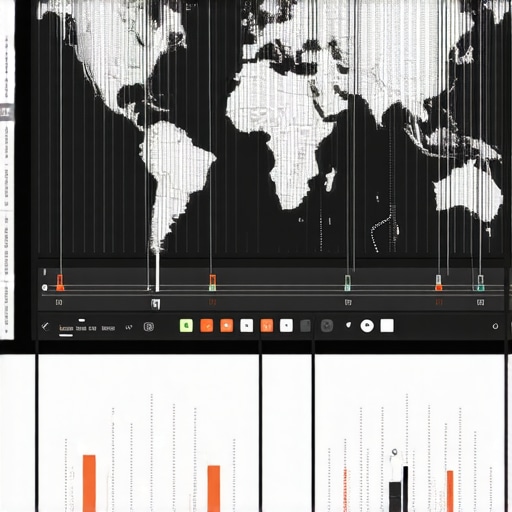
Local SEO is not a “set it and forget it” task. Rankings are highly volatile and change based on the user’s physical location. Your business might rank #1 when you are standing in your office, but drop to #8 when you are three blocks away. This is why you cannot rely on a single ranking number. You need to visualize your dominance using a “rank grid.”
Using local seo automation tools is the only way to get a true picture of your Map Pack performance. Tools like SEO Viper Tools allow you to see exactly where your “ranking bubble” ends. When you start your local link-building campaign, you should see that bubble expand. If you see your rankings improving in the organic results but your Map Pack pin isn’t moving, it’s a clear sign that you lack geographic prominence. You must monitor these shifts to understand which tactics – be it a local sponsorship or a B2B partnership – are actually moving the needle in your specific market. Without a google maps rank tracker, you are essentially flying blind, guessing at what works while your competitors take the lead.
Conclusion: Final Thoughts on google business profile seo in 2026
The transition from “Global DA” to “Local Relevance” is the most important shift a business owner can make in their digital strategy. To truly excel at google business profile seo, you must stop thinking like a global marketer and start thinking like a community leader. The Map Pack rewards businesses that are integrated into their local ecosystem. By focusing on hyperlocal sponsorships, B2B clusters, and high-quality niche citations, you create a “gravity” that pulls your pin into the Top 3.
Your 90-day roadmap is simple: Audit your current link profile, identify three local organizations to support, and reach out to five local business partners for a “Preferred Vendor” exchange. Stop chasing the “Harsh Truth” of generic backlinks and start building the local prominence your business deserves. For more insights on the technical side of this shift, read The Harsh Truth About Google Maps Backlinks and Your 3-Pack Position. Start your first outreach campaign this week and watch your local visibility transform.