
5 Specific Moves That Actually Drive More Clicks From the 3-Pack
5 Specific Moves That Actually Drive More Clicks From the 3-Pack
In the world of local search, there is the Google Maps 3-Pack, and then there is everyone else. As a Google Business Profile Product Expert, I have seen thousands of businesses struggle to understand why their phone isn’t ringing despite having a “verified” listing. The reality is brutal: the Map 3-Pack captures between 40% and 50% of total clicks for local intent searches. If you aren’t in those top three spots, you are fighting for the scraps left in the “More Places” basement.
The stakes couldn’t be higher for your google business profile seo strategy. According to data from Red Local Agency, businesses that secure a spot in the 3-Pack receive 93% more actions – that’s calls, website clicks, and direction requests – than those ranked in positions 4 through 10. The map pack features organic results, not sponsored listings (usually), making it a foundational pillar of a business’s broader SEO strategy. If you want to dominate your local market, you need more than just a listing; you need an infrastructure for growth. Here are the five specific moves that will move the needle.
Move #1: Engineering Your Profile Infrastructure for Maximum Relevance
Most business owners treat their Google Business Profile (GBP) like a digital yellow pages ad. They fill out the name, address, and phone number (NAP) and stop there. To rank higher on google maps, you must move toward “infrastructure-based SEO.” This means treating your profile as a structured data entity that Google uses to satisfy user intent.
The foundation of this infrastructure is your category selection. Your primary category carries about 75% of the weight for your ranking potential. However, the mistake most make is ignoring the power of secondary categories. You should select 2-3 highly relevant secondary categories that describe your services without diluting your primary focus. For example, if you are a “Personal Injury Lawyer,” your secondary categories should include “Trial Attorney” or “Legal Service,” but never something unrelated like “Insurance Agency” just to cast a wider net.
Relevance is one of the three pillars of the Google local algorithm. Google matches the “entity” of your business to the search query. If your profile infrastructure is weak or inconsistent, Google loses confidence in your business’s ability to serve the user. This is often why a business might vanish from the maps entirely. If you’ve faced technical hurdles, you might find that your business profile is still not showing up after a reinstatement appeal because the underlying data infrastructure is flawed or flagged as “low trust.”
To ensure your infrastructure is sound, audit your “Attributes.” These are the small tags like “Wheelchair accessible,” “Veteran-led,” or “Online appointments.” While they may seem minor, they are frequently used as filters in mobile search. By checking every applicable box, you increase the number of “long-tail” map searches your profile is eligible to appear in.
Move #2: Forcing Engagement Signals at Scale
Google’s algorithm has evolved. It no longer just looks at who you are; it looks at how people interact with you. A static profile is a dying profile. To maintain and improve google maps ranking, you must force engagement signals that tell Google your business is active and popular.
The most underutilized tool for this is Google Business Profile Posts. Many businesses post once a month – or worse, once a year. High-performing profiles post 2-3 times per week. These posts should not just be “ads”; they should be information-rich updates that include google business profile seo keywords in the first 80 characters. However, there is a specific type of interaction that most businesses miss entirely. There is a specific engagement signal most businesses forget when posting to Google: the “Click-to-Call” and “Request a Quote” buttons within the post itself. These micro-conversions signal to Google that your content is solving the user’s problem immediately.
Another critical engagement area is the Q&A section. You do not have to wait for a customer to ask a question. As a business owner, you can – and should – post your own Frequently Asked Questions and answer them. This allows you to seed the profile with semantic keywords related to your services. For example, a plumber might ask, “Do you offer 24/7 emergency water heater repair in [City Name]?” and answer with a detailed “Yes.”
Managing these signals across multiple locations can be a nightmare. This is where using a dedicated google maps ranking service or specialized google business profile seo tools like SEO Viper Tools becomes essential. These platforms allow you to automate the posting schedule and monitor engagement metrics that the standard GBP dashboard often obscures.
Move #3: Breaking the Proximity Trap
The “Proximity Trap” is the phenomenon where a business ranks #1 when the searcher is standing in their parking lot, but drops to #10 when the searcher moves three blocks away. Because “Distance” is one of the three core pillars of the algorithm, Google naturally favors the closest result. However, top-tier local map pack seo is about expanding that ranking radius.
To break the trap, you must build “Geographic Prominence.” This is achieved by creating hyperlocal content on your website that links back to your GBP. Instead of one “Services” page, create “Service Area” pages for every neighborhood you serve. These pages should include local landmarks, neighborhood-specific terminology, and even embedded Google Maps of your service route (if applicable).
We are currently seeing a trend known as the map grid shrink, where Google is tightening the proximity radius even further to combat spam. To counter this, you need to prove to Google that your “Prominence” outweighs the “Distance” of a closer, but less authoritative, competitor. This involves getting mentions in local news outlets, sponsoring local events, and ensuring your NAP data is consistent across every local directory (citations).
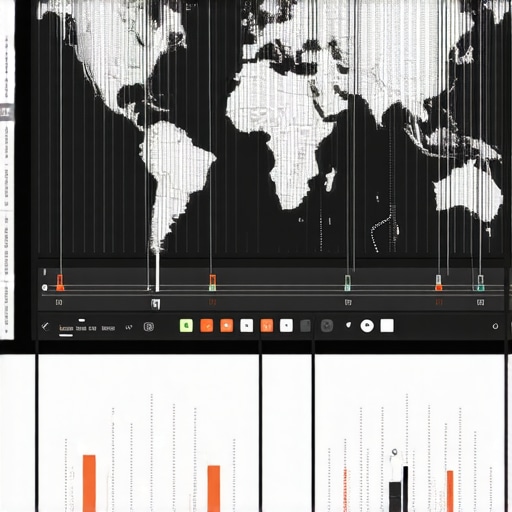
Using local seo tools to track your “Geo-Grid” is the only way to visualize this. A standard search only tells you one data point. A grid tracker shows you exactly where your authority drops off, allowing you to target your backlink and content efforts to those specific weak zones.
Move #4: Review Velocity and Semantic Keyword Integration
Most business owners are obsessed with their star rating. While a 4.8 is better than a 4.2, the algorithm cares deeply about two other factors: Review Velocity and Semantic Keywords. Review velocity is the speed at which you acquire new reviews. If you got 50 reviews three years ago and none since, Google views your business as potentially closed or irrelevant.
To rank google business profile listings effectively, you need a steady stream of fresh feedback. But more importantly, you need those reviews to contain “keywords in context.” When a customer leaves a review saying, “Great service,” it helps your reputation but does very little for your SEO. When a customer says, “The best emergency roof repair in Austin, they were very professional,” Google’s Natural Language Processing (NLP) identifies “emergency roof repair” as a service you are highly competent in.
You might wonder why your competitor ranks higher on maps with fewer reviews. Often, it is because their reviews are “keyword-rich” and come from “Local Guides” (users with a high trust score in Google’s ecosystem). You can influence this by training your staff to ask customers to mention the specific service they received when leaving a review. “If you enjoyed our service, would you mind mentioning the ‘AC installation’ in your review? It really helps us out!”
This semantic data is a massive ranking signal. Google uses these reviews to justify showing your business for queries that aren’t even in your business name or description. If 20 people mention “gluten-free pizza” in your reviews, you will eventually rank for that term even if it’s not on your primary menu in the GBP dashboard.
Move #5: Technical Map Authority & Automation
The final move involves scaling your efforts. If you are managing one location, you can do much of this manually. If you are an agency or a multi-location brand, manual data entry is the enemy of growth. You need to build “Map Authority” through technical optimizations and automation.
Map Authority is built through high-quality local backlinks – links from local chambers of commerce, local blogs, and industry-specific directories. However, the technical side involves ensuring your website’s Schema Markup (LocalBusiness Schema) is perfectly synchronized with your Google Business Profile. Any discrepancy between the “Address” on your site and the “Address” on your profile can trigger a ranking penalty or a suspension.
Scaling these technical requirements is why many local SEO resellers are scaling map authority without the manual data entry. They use gmb ranking service platforms to push updates, monitor for “suggested edits” by competitors (which can sabotage your listing), and respond to reviews using AI-assisted tools. Using local seo automation tools ensures that your engagement signals remain high even when you aren’t actively logged into the dashboard.
Furthermore, you must utilize local seo software to perform regular audits. Google frequently updates the GBP interface and features. If you aren’t utilizing new features like “Social Media Links” in your profile or the “Services” menu with detailed descriptions, you are leaving ranking points on the table. Automation allows you to deploy these updates across 10, 50, or 500 locations simultaneously.
Conclusion: The Winner-Takes-All Game
The Google Maps 3-Pack is a winner-takes-all environment. The difference between ranking #3 and #4 isn’t just one spot – it’s a massive chasm in lead generation and revenue. By focusing on your profile infrastructure, forcing engagement, breaking the proximity trap, leveraging semantic reviews, and utilizing technical automation, you position your business as the clear authority in your local market.
Don’t fly blind. Use a google maps rank tracker to see exactly where you stand today. Local SEO is not a “set it and forget it” task; it is a continuous process of proving your relevance, distance, and prominence to an algorithm that never sleeps. Start auditing your profile today, implement these five moves, and watch your click-through rate soar.