Why Your Phone Stopped Ringing Despite Having Consistent NAP Data
Why Your Phone Stopped Ringing Despite Consistent NAP Data
It is a Tuesday morning in 2026. You sit at your desk, coffee in hand, staring at a phone that refuses to ring. You check your dashboard: your Name, Address, and Phone number (NAP) are perfectly synchronized across 50 different directories. Your google business profile seo strategy, at least the one you learned three years ago, is being followed to the letter. Yet, your competitors – some with fewer reviews and messier citations – are dominating the Local 3-Pack.
Welcome to the “Ghost Town” Phone Syndrome. It is the frustrating reality for thousands of business owners who are still playing by the 2021 rulebook in a 2026 algorithm environment. The “NAP is King” era didn’t just end; it was dismantled by Google’s shift toward real-time signals and AI-driven relevance. In late 2025 and early 2026, we witnessed a massive shift where listings in the top 3 suddenly vanished, not because of policy violations, but because they failed to provide the “Dynamic Signals” Google now craves.
As a Local SEO Expert with over five years of experience, I have seen this transition firsthand. The reality is that having consistent NAP data today is like having four tires on a car – it’s expected, but it doesn’t determine how fast you’ll go or if you’ll even win the race. If you want to recover your Google Maps leads, you need to understand why the old pillars are crumbling.
Section 1: Why NAP Consistency is Now Just “Table Stakes”
For a decade, the SEO industry preached that NAP consistency was the primary driver of local rankings. The logic was sound: if Google sees the same data everywhere, it trusts the business more. While that remains true for establishing a baseline of trust, it no longer acts as a competitive advantage. In 2026, Google’s Knowledge Graph is sophisticated enough to reconcile minor discrepancies in business names or formatting without penalizing you.
NAP is now “table stakes.” It is the minimum requirement to enter the game, but it won’t help you win it. The problem is that many business owners spend hundreds of hours (or thousands of dollars) obsessing over a missing suite number in a low-tier directory while ignoring the engagement signals that actually move the needle. This is a classic case of “Static SEO” vs. “Dynamic SEO.” Static SEO (like citations) tells Google who you are; Dynamic SEO tells Google how much users care about you.
If you find yourself stuck, it might be because you are obsessing over NAP consistency while your competitors are using modern local seo tools to drive real-time interactions. Google’s algorithm has evolved from a directory-checker into a behavioral-prediction engine. It no longer asks, “Is this address correct?” It asks, “If I show this business to a user right now, will they be satisfied?”
Section 2: The “Openness” Filter, The Silent Lead Killer
One of the most significant, yet least discussed, shifts in the 2026 algorithm is the “Openness” filter. In the past, if you were a plumber and someone searched for “plumber near me” at 11:00 PM, Google might still show your listing even if you were closed, provided your SEO was strong enough. Those days are over.
Recent data and insights into how closing time impacts search results show that Google now drastically reduces the visibility of “Closed” businesses in favor of those currently “Open.” This is a real-time proximity and availability filter. If your business hours are set from 9 AM to 5 PM, you effectively disappear from the Map Pack at 5:01 PM for any searcher looking for immediate service.
This has led to a dangerous trend: business owners setting their hours to “Open 24 Hours” to game the system. However, Google’s AI now uses location history data from users to see if anyone actually visits your storefront at 3:00 AM. If the “Expected Foot Traffic” doesn’t match your “Stated Hours,” you risk a “Suspicious Edit” flag or a shadowban. To combat this, you must stop proximity lag with these 5 fast 2026 GMB rank fixes, ensuring your hours are accurate but optimized for when your customers actually search.
Section 3: Category Cannibalization & The August 2025 Spam Update
In August 2025, Google rolled out a massive Spam Update that fundamentally changed how primary and secondary categories are weighted. Many businesses that were ranking for years suddenly saw their rankings tank. Why? Category Cannibalization.
If you are a specialized contractor, such as a roofing specialist, but your primary category is set to the broad “Contractor,” you are now competing against every general handyman, kitchen remodeler, and deck builder in a 20-mile radius. Google’s 2026 algorithm prioritizes “Niche Precision.” The update specifically targeted business names that were keyword-stuffed (e.g., “Best Dallas Plumber – Fast & Cheap”) and profiles that used mismatched categories to “cast a wider net.”
When you use google business profile optimization, the goal is no longer to be “everything to everyone.” It is to be the absolute best answer for a specific query. If your primary category is too broad, you are diluting your authority. I often see “5 Category Mistakes That Bury Your Business Profile in Search Results” where businesses select “Restaurant” instead of “Authentic Italian Restaurant,” losing out on the high-intent traffic that actually converts into table reservations.
Section 4: The Engagement Signal, Clicks, Directions, and Dwell Time
If NAP is the foundation, Engagement is the fuel. Google’s 2026 ranking factors are heavily weighted toward user intent signals. It’s no longer enough to just appear in the search results; you have to prove to Google that users want to interact with you.
Google tracks several key metrics to determine your “Engagement Score”:
- Click-Through Rate (CTR): How many people click your listing compared to the ones above or below it?
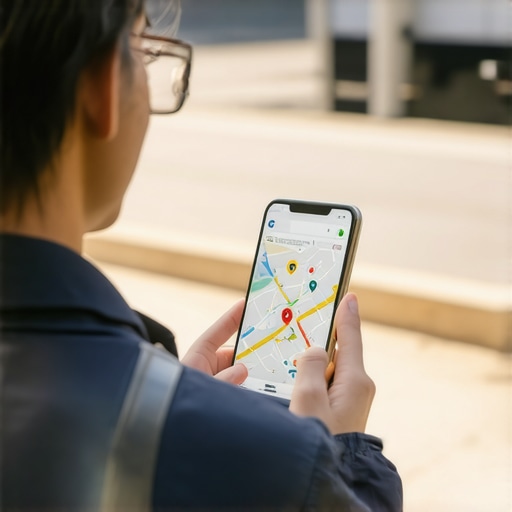
- Direction Requests: Does the user actually start a navigation route to your location? This is a massive signal of real-world intent.
- Dwell Time on Profile: Are users reading your updates, looking at your photos, and checking your Q&A?
- Secondary Actions: Are they clicking your “Menu” or “Book Online” buttons?
If your listing has perfect NAP but zero engagement, Google assumes you are irrelevant or, worse, a “ghost” business. This is why you must stop ignoring these 3 Google Business Profile engagement signals. A profile with 50 high-quality, recent photos and an active Q&A section will outrank a “perfectly consistent” citation profile every single time in today’s landscape.
Section 5: Why Your Website is Dragging Your Map Rank Down
One of the most common mistakes I see is treating the Google Business Profile and the company website as two separate entities. In 2026, the “Local Organic” and “Map Pack” algorithms are more tethered than ever. If your website is slow, not mobile-optimized, or lacks local topical authority, your Map Rank will suffer.
Google uses your website to “justify” your map ranking. If a user searches for “emergency water heater repair,” and your website has a dedicated, high-quality page about that specific service with local schema markup, Google feels confident placing you in the Map Pack. If your website is just a generic homepage, you lack the “Signal Strength” to compete.
Furthermore, Google’s AI now scans your website for “Trust Signals.” If your site lacks a clear privacy policy, has broken links, or fails Core Web Vitals, it reflects poorly on your GBP. Many businesses benefit from a professional google maps ranking service to ensure that the technical synergy between their site and their map listing is seamless. Your website is the “brain” behind your map listing’s “face.”
Section 6: The 2026 Action Plan, Beyond the NAP
If you want to stop the silence and get your phone ringing again, you need a proactive strategy that goes beyond basic citations. Here is the 2026 Action Plan for local dominance:
- Audit Your Primary Categories: Ensure your primary category is the most specific one available. Use secondary categories sparingly and only if they are 100% relevant.
- Implement Review Automation (With Keywords): Don’t just ask for “a review.” Encourage customers to mention the service they received and the city they are in. “Hasnain did a great job with my AC repair in Austin” is worth ten generic “Great service!” reviews.
- Hyper-Local Content Posting: Use GBP Posts to talk about local events, local projects, and local news. This signals to Google that you are physically active in the community.
- Visual Freshness: Upload at least 3-5 new photos or videos every week. Use “behind the scenes” footage to increase dwell time.
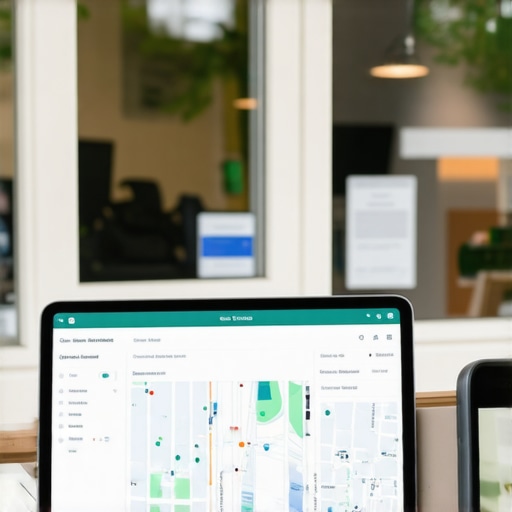
- Utilize Modern Toolsets: Stop manual tracking. Use google maps seo tools to monitor your grid rankings and identify exactly where your visibility drops off.
By following these 7 Google Business Profile tips for 2026 that beat the algorithm, you move from a passive participant to an active competitor.
Conclusion: From Foundation to Fuel
In summary, NAP consistency is the foundation of your house, but engagement, category precision, and website synergy are the walls, roof, and electricity. You cannot live in a foundation alone. If your phone has stopped ringing, it’s a sign that Google no longer finds your “Static” presence compelling enough to show to its users.
The 2026 algorithm rewards businesses that are active, relevant, and highly engaged with their local community. It’s time to stop worrying about whether your “St.” should be “Street” and start worrying about whether your profile provides real value to the person holding the phone.
Are you ready to reclaim your spot in the 3-Pack? Start by auditing your profile with the latest local seo software or dive deeper into our guide on how to recover Google Maps leads when your profile stops showing up. The leads are still there – you just need to show Google you’re the one who deserves them.