Why Standard Local SEO Plans Fail Small Businesses With Tight Budgets
Why Standard Local SEO Plans Fail Small Businesses With Tight Budgets
If you are a small business owner – a plumber in Chicago, a roofer in Dallas, or a personal injury lawyer in Miami – you have likely been pitched a “Standard Local SEO Package.” These packages usually range from $500 to $1,500 per month and promise to “get you on the first page of Google.” Yet, after six months of paying the invoice, your phone still isn’t ringing. You receive monthly reports filled with green arrows and “work completed” checklists, but your actual google business profile seo hasn’t moved an inch in the real world.
The reality of the 2026 local search landscape is harsh. While average SEO budgets for small businesses can technically span from $500 to $5,000, the “affordable” $200 to $500 monthly packages are often worse than doing nothing. They are frequently automated “set it and forget it” services that trigger spam filters or, at best, focus on metrics that have zero impact on your bottom line. In this guide, we are going to pull back the curtain on why these standard plans fail and what you actually need to rank google business profile assets in a competitive market.
The “Checklist” Trap: Why Task-Based SEO Doesn’t Equal Rankings
Most local SEO agencies operate on a “task-based” model. They sell you a package that includes five citations per month, two blog posts, and a monthly report. This creates a “checklist” mentality where the agency feels they’ve done their job because they checked the boxes, regardless of whether your business actually climbed the rankings. This is the fundamental flaw in local seo for small business today: agencies are selling activity, not signals.
Take citations, for example. For years, the industry preached that Name, Address, and Phone Number (NAP) consistency was the holy grail. Agencies still charge hundreds of dollars to “clean up” your citations on obscure directories that no human has visited since 2012. However, modern research suggests that obsessing over NAP consistency is often a waste of time compared to other, more powerful ranking signals. Google has become incredibly sophisticated at identifying your business entity even if your “Suite” is abbreviated as “Ste” on one directory and “Unit” on another.
While the agency is busy updating your listing on “YellowPages-But-Worse.com,” your competitors are focusing on link signals – which remain the #1 ranking factor for organic local reach and a massive driver for the 3-Pack. A standard plan rarely includes high-quality, local link building because it’s difficult and expensive. Instead, they give you “activity” because it’s easy to report. If your google maps ranking service is just a list of directory submissions, you are essentially paying for a digital paperweight.
The Proximity Problem: Why You Only Rank at Your Front Door
One of the most frustrating experiences for a small business owner is looking at a ranking report that says you are #1, only to realize you are only #1 when you are standing in your own parking lot. This is known as the “proximity trap.” Google’s algorithm heavily weights the physical distance between the searcher and the business. If your agency isn’t actively working to expand your “ranking radius,” you are effectively invisible to 90% of your potential customers.
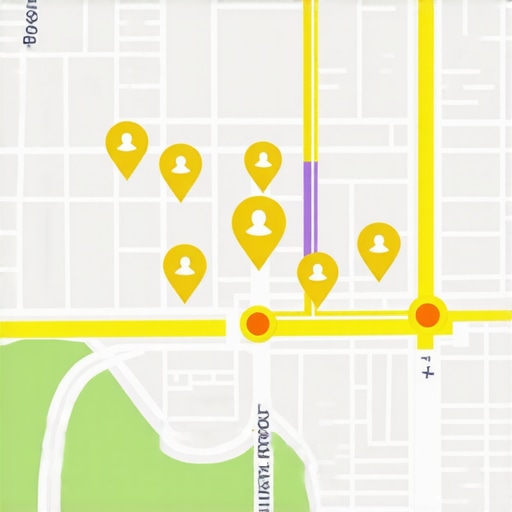
Standard SEO plans fail here because they don’t account for the “Proximity Glitch.” They optimize your profile for your specific address and call it a day. But if you are a contractor who serves a 30-mile radius, ranking at your office doesn’t help you get jobs three towns over. To see where you actually stand, you need to use a google maps rank tracker that provides a grid-based view of your rankings across your entire service area. Most agencies avoid showing you these grids because they reveal the “blind spots” where your SEO is failing.
To break out of this radius, you need more than just a basic profile setup. You need to understand the hidden proximity glitch that keeps your business out of the 3-Pack. This involves generating localized signals – such as geo-tagged images, local check-ins, and neighborhood-specific content – that tell Google your business is relevant to the entire city, not just the block you occupy. Standard plans simply don’t have the budget or the expertise to execute this level of hyper-local optimization.
Why Generic Content and “Ghosted” City Pages Fail
We have all seen them: the generic blog posts titled “5 Tips for Maintaining Your Roof” or “Why You Need a Lawyer After an Accident.” These are the hallmark of a $500/month SEO plan. The agency hires a low-cost writer who has never been to your city to churn out 500 words of “fluff” content. This content is then posted to your site with the hope that it will magically improve your google maps lead generation. It won’t.
Google’s Helpful Content Update and subsequent core updates have made it clear that generic, AI-generated, or low-value content is a liability. Furthermore, many agencies try to build “City Pages” to rank in surrounding suburbs. These pages often end up “ghosted” – meaning Google indexes them, but they never appear in the 3-Pack for those locations. This happens because the pages lack “Entity Authority.” They are just shells with the city name swapped out.
If you want to stop your local seo ranking factors from flatlining, you have to learn how to stop your city landing pages from being ghosted by the 3-Pack. This requires creating content that is actually useful to a local resident. Mention local landmarks, discuss local weather patterns that affect your service, and link to other local organizations. Generic content is a signal to Google that you aren’t a local authority; high-quality, localized content is the fuel that drives the gmb ranking service engine.
The High-Impact Alternative: Signals Over Activity
If standard plans are failing, what actually works in 2026? The answer lies in shifting your focus from “activity” to “signals.” Google’s local algorithm is built on three pillars: Relevance, Proximity, and Prominence. To win, you must dominate at least two of these, and ideally all three.
Advanced google business profile optimization goes far beyond filling out your “About” section. It involves a strategic approach to signal generation:
- Relevance: Using secondary categories and services strategically to match a wider array of search queries.
- Proximity: Expanding your reach through localized backlink profiles and geo-relevance signals.
- Prominence: This is where most small businesses fail. Prominence is driven by your offline reputation being mirrored online. This means high-quality reviews with keywords, mentions of your business on authoritative local news sites, and a consistent flow of user engagement.
Standard plans fail because they treat SEO as a static setup. In reality, it is a dynamic competition. You might also wonder why your competitor ranks higher on maps with fewer reviews. It’s usually because their few reviews are “high-weight” (containing photos and keywords) or because they have significantly stronger local link equity. A high-impact strategy identifies these gaps and attacks them directly rather than following a generic monthly checklist.
Automation: The Secret Weapon for Tight Budgets
The biggest hurdle for small businesses with tight budgets is the cost of manual labor. A high-end SEO strategist costs $150-$300 per hour. If you are paying $500 a month, you are getting maybe two hours of actual expert attention. The rest is either automated junk or handled by an entry-level intern. This is why the “Standard Plan” model is fundamentally broken for the small guy.
The solution is to leverage local seo automation tools. Automation allows a small business to perform the same “signal generation” that a big agency would do manually, but at a fraction of the cost. By automating the tedious parts of the process – like review requests, post scheduling, and rank tracking – you can reallocate your limited budget toward high-impact activities like local sponsorship links or professional photography.
Smart automation is about efficiency, not shortcuts. For example, using 5 automation shortcuts to fix your GMB rank after a core update can help you recover visibility in days rather than months. When you automate the data gathering and the basic posting schedules, you can spend your time on the “Prominence” signals that actually move the needle. This is how a “mom and pop” shop can outrank a national franchise with a massive marketing department.
Conclusion: How to Pivot Your Strategy
If you are currently paying for a standard local SEO plan and your phone isn’t ringing, it’s time to stop the bleed. “Cheap” SEO is not an investment; it is a recurring expense that yields no ROI. In the competitive world of Google Maps, you are either in the 3-Pack or you are invisible. There is no “participation trophy” for being on page two.
To rank higher on google maps, you must demand transparency from your providers. Stop looking at “citation reports” and start looking at “conversion signals.” Are people clicking your “Call” button? Are they asking for directions? Is your ranking radius expanding into the high-value zip codes you actually want to serve? If the answer is no, your strategy is failing.
The path forward for small businesses with tight budgets is clear: move away from task-based packages and toward a signal-based, automated approach. Focus on proximity expansion, entity authority, and high-weight reviews. By cutting out the “fluff” of standard plans and focusing on what the algorithm actually values, you can finally claim your spot at the top of the search results and turn your Google Business Profile into the lead-generation machine it was meant to be.